Otoplasty vs. Ear Molding: What Are the Options for Reshaping Your Ears?
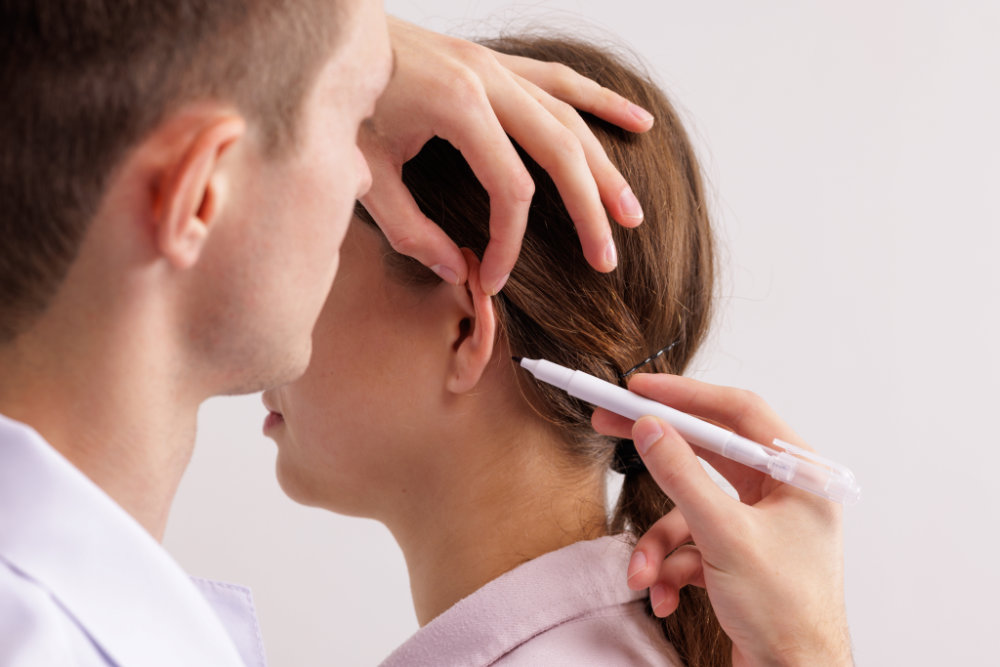
Subtle changes to the shape or position of the ears can make a big difference to your overall facial balance. At Texas Liposuction Specialty Clinic, we perform ear surgery in Houston, TX, to address these concerns using approaches that match the unique structure of each patient’s ears.
Because every ear shape and degree of prominence differs, there isn’t one single method suited for everyone. Some patients benefit from a traditional otoplasty, while others may be candidates for less invasive techniques. We will help you understand your options so that you can determine which approach may best fit your goals for natural-looking ear symmetry.
What Surgical Ear Correction Can Offer
Many people seek ear surgery to address features that stand out more than they’d like or don’t match the rest of their facial structure. Ears that stick out, appear too large, or sit unevenly can all be reshaped through surgical correction. Some patients are most concerned with the size or projection of their ears, while others want to improve natural folds or reduce stretched or elongated earlobes.
Injuries, genetics, or changes over time can also lead to irregular contours that make the ears look uneven. Ear reduction surgery can help refine these features, bringing the ears into better proportion with the rest of the face. No matter the concern, the goal is to create balance without making the ears look surgically altered.
What Is Otoplasty?
Otoplasty reshapes the ear cartilage to improve its size, contour, or position. The procedure can correct ears that stick out too far from the head, reduce overly large ears, or restore symmetry between both sides. It may also refine the natural folds of the upper ear or repair deformities caused by injury or congenital differences. Small incisions are typically made behind the ear to allow for subtle repositioning or reshaping of the cartilage.
The Benefits of Otoplasty Surgery
Otoplasty surgery offers a long-term solution for people who want to permanently correct the appearance or proportion of their ears. The procedure can address several cosmetic concerns at once, such as size, angle, and definition. Because the incisions are discreetly placed, visible scarring is minimal and typically hidden behind the ear. Restoring proportion to the ears can also help bring better focus to other facial features. Each surgical plan is customized to the individual’s anatomy and desired degree of correction.
Recovery and Results From Otoplasty Surgery
Recovery after otoplasty usually involves mild swelling and temporary tightness around the ears, which gradually subsides within a few weeks. A soft dressing or headband may be worn to protect the ears and help maintain their new position while healing. Most people return to light activities within a week, but full healing and refinement of the ear shape take longer. Once recovery is complete, the results are stable and long-lasting, with a natural contour that appears unaltered.
What Is Ear Molding?
Ear molding is a nonsurgical approach for reshaping the size or position of the ears. This technique uses flexible molds made from materials like silicone or vinyl that apply consistent pressure to the cartilage of the ears over a period of several weeks for gentle reshaping.
While effective, the timing of ear molding is critical. This technique works best on newborns and should be started within the first two weeks of life, when the ears are still soft and pliable. After about six weeks, the cartilage becomes more rigid and less responsive to nonsurgical treatment. When started early, ear molding provides a safe and painless way to address differences in ear shape, size or fold, including protruding ears, pointed ears (Stahl’s ear), constricted ears, and cryptotia, where part of the upper ear is buried under the skin.
Other Nonsurgical Otoplasty Options
While ear molding is an excellent, nonsurgical technique for reshaping the ears, it must begin shortly after birth to be effective. For older children or adults, an incisionless otoplasty can sometimes be used, involving small punctures behind the ear where sutures are placed to reposition the cartilage.
While this option can reduce ear prominence without traditional surgery, it may not fully correct certain structural issues, such as an enlarged conchal bowl. Suture-related complications, including irritation or extrusion, are also possible and can affect long-term results. A consultation is the best way to determine whether a nonsurgical method or traditional otoplasty would provide the most natural and lasting outcome.
The Differences Between Otoplasty and Nonsurgical Methods at a Glance
- Technique: Otoplasty reshapes or repositions the ear cartilage through small incisions behind the ear, while nonsurgical or minimally invasive methods use external molding or fine sutures to hold the ear in a new position.
- Duration: Otoplasty usually takes one to two hours under local or general anesthesia. Incisionless otoplasty often takes less than an hour, while ear molding applies gentle pressure over a period of several weeks.
- Recovery: Otoplasty generally requires one to two weeks of healing, while nonsurgical approaches involve only mild swelling and little to no downtime.
- Longevity: Otoplasty provides lasting structural change, whereas nonsurgical techniques may produce temporary or partial improvement depending on cartilage flexibility and the method used. Ear molding also provides lasting results when started at the appropriate time.
- Scarring: Otoplasty incisions are placed behind the ears, where they are hidden, while nonsurgical options typically leave no visible scars.
How to Choose the Right Ear Surgery
Choosing the right method for reshaping the ears depends on the specific features you want to change and the level of correction needed. Otoplasty may be best for reshaping large or uneven ears, while less invasive techniques can be an option for subtle adjustments. If you’re concerned about the appearance of your newborn’s ears, ear molding can offer noticeable, lasting change. A detailed consultation allows us to examine your ear structure, discuss your goals, and recommend an approach that fits your anatomy. Both surgical and nonsurgical techniques can offer natural results when matched carefully to the right candidate.
Finding the Right Surgeon for Your Procedure
Selecting a qualified surgeon is one of the most important steps in getting the lasting results that you want. Experience in both otoplasty and nonsurgical methods allows for accurate recommendations and precise technique. A thorough discussion about goals, recovery expectations, and outcomes helps set a clear plan before surgery. Reviewing before-and-after photos and asking about the surgeon’s experience with ear plastic surgery can give you a better understanding of their approach and skill.
Find the Right Ear Correction Option With a Consultation in Houston, TX
Otoplasty and nonsurgical techniques both offer ways to reshape the ears and create better facial balance, with each option suited to different levels of correction. Understanding how these methods differ in approach, recovery, and longevity can help you make an informed decision about your treatment. To learn more or schedule a consultation with Texas Liposuction Specialty Clinic in Houston, TX, call (713) 461-8866 or contact us through our online form.